
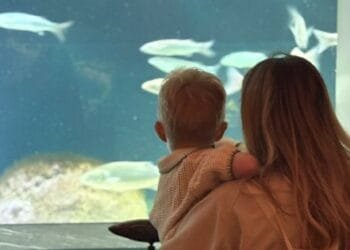

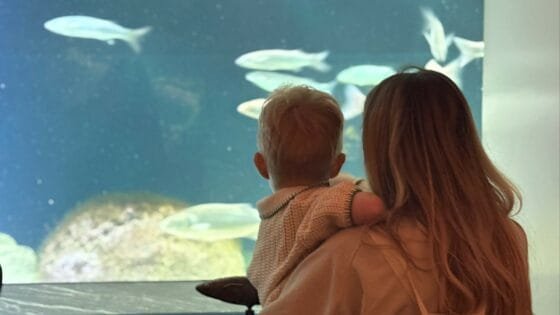
One of the world’s oldest aquariums reopened in Amsterdam on Saturday, following a five-year €50 million restoration project that brought in more than a hundred expert biologists, curators and engineers to rebuild the monument and devise its exhibits.
Originally opened in 1882, the Artis aquarium shut its doors in 2021, in the middle of the coronavirus pandemic, because the building was no longer safe. More than 140 years of saltwater had eaten through its walls.
The restoration and its challenges have flowed into the site’s new theme: “water – the source of all life”, which highlights our relationship with the earth’s oceans, rivers and canals – and how marine climate damage seeps into every aspect of our lives.
“Water is our closest friend, something we need, but it’s also what destroyed the building,” Anne van Dijk, head of the Artis aquarium, told DutchNews. “If we don’t take care of water well enough, it’s going to be one of the biggest challenges we have to face.”
“The source of all life”
The aquarium now holds around 250 species, ranging from cuttlefish to short-tail nurse sharks, alongside interactive galleries built by much of the same team behind the zoo’s Micropia microbe museum and its Groote Museum.
Visitors can see clown triggerfish and other coral-reef species, the red-tailed catfish, and the critically endangered European eel.
They can also see poison dart frogs and a Brazilian rainbow boa snake in a tropical tank, part of the Amazon gallery, called “Life in the rhythm of the river”.
Visitors can build a submarine, set ocean currents in motion and look through microscopes at marine microbes.
There is a “canal gallery” showing an example of water life beneath the Dutch grachten. Most people have no idea what lives in the water they cross every day, Van Dijk said: the eels, crabs and algae sharing the city’s submarine environment, along with the bikes and rubbish.
“Water is like a mirror; you cannot really look into it from above,” Van Dijk said. “That’s why hardly anyone knows what lives down there.” The aquarium is intended to reconnect people with nature and make them think about their own impact on it.
A gallery on microplastics, including those shed by washing machines, is due to open later this year.
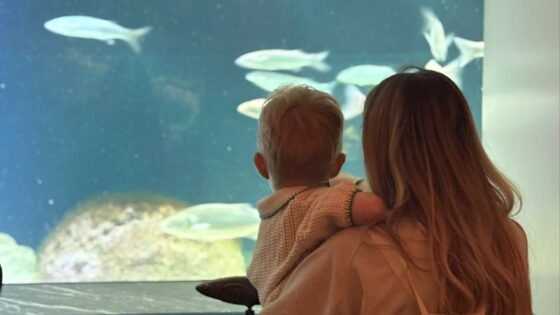
Salt through the walls
The aquarium runs on two separate water systems, and it was the saltwater one that did the damage. Over more than 140 years, salt leached out of the tanks and into the walls, floors and steel supports until the building was no longer safe.
The saltwater section bore the brunt of the work: its tanks, the filtration reservoirs in the catacombs below and the roof above were all demolished and rebuilt, while the rest of the monument was restored.
“Everything in the middle was gone,” Van Dijk said. “You could look from downstairs all the way up through the roof.”
Starting from an empty shell let the team make the new tanks bigger than the originals. They were built from self-healing concrete, made with bacteria that repair cracks on contact with water.
“We worked with living concrete, concrete with certain microbes in it,” Van Dijk said. “As soon as they get in touch with water, they start making a substance that fills up the tiniest gaps.”
The restoration also preserved the aquarium’s original Victorian filtration system, designed by the British aquarist William Alford Lloyd, which Artis said is the last of its kind still working anywhere in the world. Around 90% of the building is now open to visitors, including the catacombs that house the system.
Artis was recognised as a professional monument-conservation organisation in 2025, partly on the strength of the project.
The aquarium is now open daily from 9am to 6pm. It can be visited with a standard Artis-Park ticket, which costs from around €29.50 for adults and €25.50 for children aged 3 to 12, with under-2s free.