


Nearfield Instruments, a Rotterdam company that makes machines to detect flaws in microchips as they are manufactured, has raised $380 million (€330 million) in a funding round that brings its value to $1.6 billion (€1.4 billion).
The deal makes Nearfield a “unicorn” – a start-up worth more than $1 billion – and is, the company said, the largest investment round ever in a Dutch deep-tech firm.
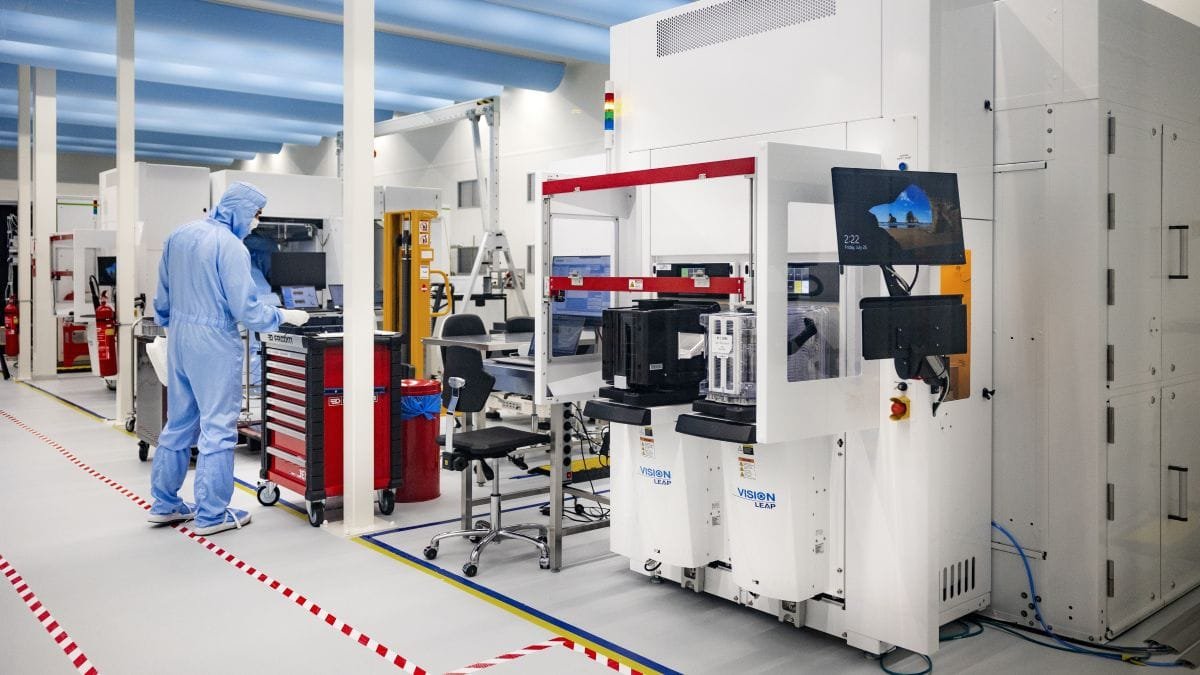
Founded in 2016 as a spin-off from the research institute TNO, Nearfield builds equipment that can spot imperfections on chips at the atomic level during production.
Demand for such tools is rising as chipmakers pack ever more components onto a single chip – more than 100 billion transistors on a surface the size of a fingernail in the latest designs – which makes quality control harder.
A second ASML?
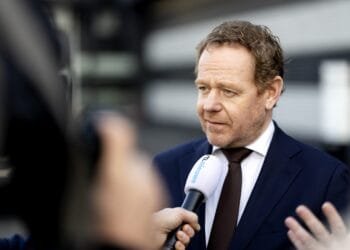
Chief executive Hamed Sadeghian said that measurement and inspection are becoming as critical to chip manufacturing as lithography, the field dominated by chip-machine maker ASML.
Process control is becoming “the new checkpoint” in the industry, he told the Financieele Dagblad, and gives the Netherlands a chance to build a dominant position in the chip supply chain comparable to ASML’s in lithography.
ASML is the country’s most valuable listed company and the only maker of the most advanced chipmaking machines, and Nearfield is a tiny fraction of its size.
The round was led by the US investment firm Fidelity, with new backers including Singapore’s state investor Temasek and Qatar’s sovereign wealth fund. The state-backed investor Invest-NL and existing shareholders TNO Ventures and ING also took part.
That line-up sits alongside a wider government effort to keep strategic technology firms in the country. Two weeks ago ministers put an extra €360 million into a high-risk tech fund – which counts Nearfield among its investments – to reduce Dutch reliance on American and Chinese technology.
Expansion
The money will go mainly towards product development, research and extra production capacity, Sadeghian said. The core of the development work will stay in the Netherlands, where the company opens a new production line in Rotterdam this week, while it adds manufacturing capacity in Asia, probably in Singapore.
Most of Nearfield’s customers are in Asia and the United States, with South Korea’s Samsung among them, but Sadeghian said the firm would stay in the Netherlands because of its strong network of specialist suppliers.
He has previously warned that cuts to the 30% ruling, the tax break for some international workers, risk driving away the skilled migrants the company depends on.
Nearfield’s raise follows a run of large funding rounds at Dutch chip and AI companies, including $250 million for Eindhoven’s Axelera AI in February and a reported $400 million for British-Dutch CuspAI, which the firm would not confirm.