


The Dutch government is planning to set up low nitrogen zones around protected nature areas as part of its plan to bring emissions within European limits and ease restrictions on farming and construction.
Media outlets including national broadcaster NOS said they had seen details of the plans that agriculture minister Jaimi van Essen is due to present on June 26, a week before the summer recess.
The plans are the first major test of the centre-right coalition government’s promise to end the gridlock in agriculture and the construction industry that followed a Council of State ruling in 2019 that European limits on nitrogen compound emissions were legally binding.
The rules are designed to protect vulnerable nature areas known as Natura-2000 zones from being damaged by nitrogen pollution, which stimulates the growth of some plants at the expense of others, reducing biodiversity.
Rob Jetten’s government has revived the €20 billion nitrogen fund that was scrapped by Dick Schoof’s coalition, when the agriculture portfolio was held by the farmers’ party BBB. The money is supposed to subsidise farmers who want to improve their energy efficiency or relocate, as well as funding voluntary buyouts.
“A load of nonsense”
According to NOS, the cabinet wants to draw zones of 1km radius around large areas and 500m zones around smaller ones. Farms in those areas would have to reduce their nitrogen output significantly by downsizing or innovating, or move further away.
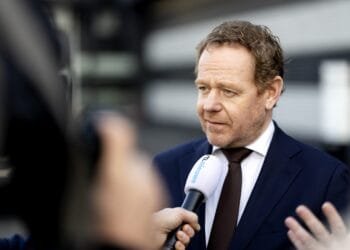
Van Essen reacted angrily to the leaks, denouncing the details as “a load of nonsense”. But he admitted that it was “no secret” that the cabinet wanted to bring in a zoning scheme.
He added that the fine detail of the plan was still being negotiated at the Catshuis, the prime minister’s official residence. “Nothing is definite in politics until it’s done,” he said.
The three coalition parties, D66, CDA and VVD, are understood to have agreed on the broad outline, but they still have to talk to opposition parties who will be needed to secure a majority in parliament, such as the left-wing party PRO (formerly GroenLinks-PvdA) and the right-wing JA21.
Media outlets reported that the government wanted to set a cap on emissions per sector, starting with dairy farming, which is one of the biggest sources of nitrogen pollution.
Van Essen dismissed other reports that the government could order provinces to cap the number of livestock animals farmers hold if they failed to take steps to reduce emissions, effectively forcing a cull. “We’re not talking about that,” he said.
Mol level
Another idea supposedly under consideration is raising the “mol”, a measure of pollution used when deciding if developments require a nature permit.
At the moment the threshold is 0.005 mol, meaning nearly every project needs a permit, regardless of size. The cabinet reportedly wants to change the level to 0.5 mol, which would make it easier for smaller projects to obtain planning permission.
However, changing the mol level used for calculations has no impact on actual nitrogen compound emissions, which are the basis for deciding if the Netherlands is breaching European limits.