


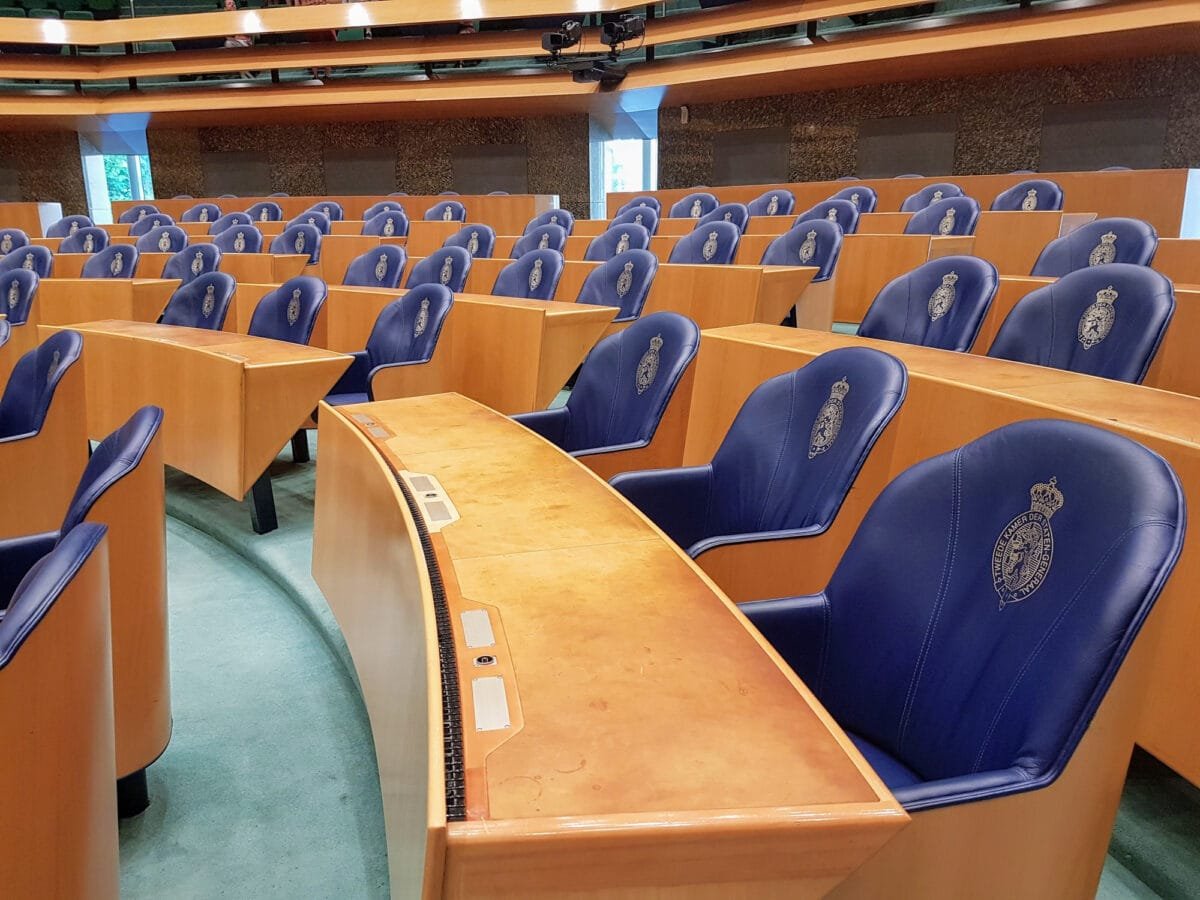
Opposition parties will have their first chance to challenge the incoming government of D66, VVD and CDA when parliament debates the new coalition agreement on Tuesday.
The three parties are expected to face strong criticism for their plans to cut healthcare spending by €10bn and social security by €6.5bn over the next four years.
But the minority coalition will need support for its plans from the opposition because the 66 seats the three parties hold in the lower house leave it 10 short of a majority. The picture in the Senate, where they have just 22 of 75 the seats, is even more complicated.
Jesse Klaver, leader of the left-wing alliance GroenLinks-PvdA, the largest opposition party, has warned his party will not support the cabinet’s plans without a “fundamental” change of course.
At a party meeting in Utrecht at the weekend, he attacked the “irresponsible spending cuts” in the coalition agreement, but also opened the door to negotiations to water down the plans.
“The country needs to move forward and we need to make sure political parties work together,” he said. “We are still prepared to do that, but the substance really has to change.”
Retirement age
An early focus for the opposition is likely to be the plan to accelerate the extension of the state retirement age, which would mean people in their thirties will have to work until their 70th birthday.
Under a pensions deal agreed in 2019 with unions and employers, the retirement age is tied to life expectancy, going up by eight months for every extra year people are expected to live. The coalition parties want to make this ratio one to one.
The ChristenUnie and pensioners’ party 50Plus, who have four seats, have said the plan flies in the face of a binding agreement, while the FNV, one of the Netherlands’ largest trade unions, called it “unacceptable, unnecessary and unfair”.
“Hard workers like maternity nurses and builders are seeing their hard-earned pensions moving further away,” said CU leader Mirjam Bikker.
The CU, like GL-PvdA, is also critical of the proposed cuts to reduce incapacity benefits and cut €2 billion from elderly care, partly by introducing means testing for people living in nursing homes.
The coalition parties could seek support from parties on the right, but they are likely to run up against opposition on their environmental policies.
Asylum laws
JA21, which has nine seats, wants to reopen the Groningen gas fields and enable drilling in the Wadden Sea, which the coalition agreement explicitly rules out.
Party leader Joost Eerdmans has kept his cards close to his chest so far, aware that JA21’s support is potentially crucial for the coalition parties. He was due to announce his party’s broad stance on a TV talk show on Monday, but called off sick at the last minute.
The right-wing parties are also critical of the plans to build more wind farms and force farmers to downsize in order to meet European limits on nitrogen pollution.
They will also press for tougher rules against asylum seekers, such as scrapping the so-called “spreading law” which allows the government to relocate asylum seekers around the country even if it goes against the wishes of local councils.
The farmers’ party BBB, which has 12 seats in the senate, could try to force a reinstatement of the low-tax red diesel, which was one of its flagship policies when it joined the last government.
“Outstretched hand”
D66 and prospective prime minister Rob Jetten said when the coalition agreement was presented on Friday that he saw it as an “outstretched hand”, acknowledging that the three parties will have to make concessions to the opposition.
“Politics with an outstretched hand makes demands of us all: from the coalition, parliament and wider society,” Jetten said.
Tuesday’s debate will be a first indication of how the opposition parties are likely to approach the negotiations.
BBB leader Caroline van der Plas expects the parties opposed to the pension reforms to join forces to force a rethink, while Jan Struijs of pensioners’ party 50Plus said his telephone had been ringing all weekend.
“People over 40 will have to keep working until they’re 70, and when they stop there’ll be no care for them,” Van der Plas said.
Wilders blockade
One party the coalition will not be able to count on is the far-right PVV, led by Geert Wilders, who has vowed to bring down the new government as quickly as possible through “uncompromising opposition”.
The PVV’s resistance has been weakened by the defection of seven MPs led by Gidi Markuszower, reducing Wilders’ faction to 19 MPs.
Markuszower said his group was prepared to co-operate with the government, but has also said the plans require “a lot of repair work”.
MPs are expected to vote in favour of the coalition agreement after Tuesday’s debate and give Rob Jetten a mandate to form a new cabinet. The real tests will come later when the three parties start to bring their draft laws to parliament.